Course Summary

Comparative Fiqh Course

E Islamic Studies Academy’s Comparative Fiqh Course trains advanced students of sacred knowledge, university-level learners, and practicing Imams to analyze the legal methodologies of the four major Sunni schools using primary textual evidences and classical scholarly frameworks.

English-speaking Muslims in Western diaspora countries rarely encounter rigorous Fiqh al-Muqaran instruction delivered in clear, structured English. E Islamic Studies Academy’s Al-Azhar certified scholars address that gap through private, level-appropriate sessions in comparative Islamic jurisprudence.

More Details Pricing Testimonials

What Does the Comparative Fiqh Course Cover?


E Islamic Studies Academy’s Comparative Fiqh Course covers the classification of Islamic Fiqh, the primary sources of Islamic law — Quran, Sunnah, Qiyas, and Ijma — and the juristic methodologies of the Hanafi, Maliki, Shafi’i, and Hanbali schools through authenticated classical references.

Sessions are conducted in structured English, making advanced comparative Islamic jurisprudence accessible to analytical learners who seek a disciplined academic understanding of how the major schools derive and evaluate legal rulings through Ijtihad and Adillah.

How Does the Comparative Fiqh Curriculum Progress?


E Islamic Studies Academy’s Al-Azhar certified scholars structure the comparative Fiqh course across sequenced levels, from introductory jurisprudence through advanced Fiqh al-Muqaran methodology, ensuring students build a firm legal foundation before engaging in cross-school scholarly comparison.

1. Students Examine the Classification of Islamic Fiqh Sources

The classification of Islamic Fiqh — Quran, Sunnah, Qiyas, and Ijma — forms the foundational layer of E Islamic Studies Academy’s Comparative Fiqh Course. Students examine how successive generations of jurists derived permanent general rules from these sources through Tafseer, analogy, consensus, and Ijtihad. This module is available within the full Comparative Fiqh Course or as a standalone entry-level program based on the student’s current academic level.

2. Analyzing Fiqh al-Ikhtilaf Across the Four Sunni Schools

Fiqh al-Ikhtilaf — the disciplined study of scholarly differences between jurists — is covered with reference to the Hanafi, Maliki, Shafi’i, and Hanbali schools’ respective evidences and legal reasoning. Scholars at E Islamic Studies Academy guide students through classical texts that present these differences systematically, distinguishing between authentic scholarly disagreement and mere opinion. This module is available within the full Comparative Fiqh Course or as a standalone track for students with prior Fiqh grounding.

3. Tracing Juristic Methodology Through Ilm al-Khilaf

Ilm al-Khilaf — the science of critically engaging the evidences of opposing legal views through the protocols of debate and scholarly argumentation — is presented at the intermediate and advanced levels of E Islamic Studies Academy’s Comparative Fiqh Course. Students analyze how each school constructs its proofs and answers critiques using Shari’i evidence and established legal principles. This module is available within the full Comparative Fiqh Course or as a standalone advanced program for qualified students.

4. Advanced Students Engage Fiqh al-Muqaran Methodology

At the advanced stage of E Islamic Studies Academy’s Comparative Fiqh Course, students study Fiqh al-Muqaran — the comparative evaluation of opinions and proofs across legal schools — grounded in the principles and history of Islamic jurisprudence. Coverage includes the foundations of jurisprudential reasoning, types of evidence, methods of deduction, and established rules with applied examples. This module is available within the full Comparative Fiqh Course or as a standalone program for students at the istiqsa’ level of acquisition.

Outcomes


What Do Students Achieve in the Comparative Fiqh Course?

E Islamic Studies Academy's Comparative Fiqh Course produces verified academic outcomes across legal comprehension, juristic reasoning, school-specific methodology, and applied Fiqh evaluation.

Students Master the Classification of Islamic Fiqh Sources

Graduates accurately identify and apply the classification of Islamic Fiqh — Quran, Sunnah, Qiyas, and Ijma — as permanent foundations for deriving legal rulings. Coverage extends to Ijtihad and its conditions as understood by the four Sunni schools. E Islamic Studies Academy's Al-Azhar certified scholars verify this outcome through structured assessments requiring students to trace each ruling back to its respective source and justify the deduction method used.

Learners Analyze School-Specific Juristic Reasoning and Evidence

Students identify the distinct legal methodologies of the Hanafi, Maliki, Shafi'i, and Hanbali schools, demonstrating how each constructs legal rulings from textual evidences. Particular attention is given to where the schools agree and where their deductions diverge. E Islamic Studies Academy's instructors confirm this outcome by requiring students to present opposing proofs on selected issues and evaluate them according to established jurisprudential principles rather than personal preference.

Scholars in Training Gain Competency in Fiqh al-Ikhtilaf

Advanced students develop the academic competency to engage classical Fiqh al-Ikhtilaf literature — texts presenting jurists' differences on legal issues from Taharah and Salah through transactions — without confusing disagreement with uncertainty about the faith itself. E Islamic Studies Academy's scholars assess this by directing students through graduated classical references, confirming they can distinguish between the three disciplines: Fiqh al-Ikhtilaf, Ilm al-Khilaf, and Fiqh al-Muqaran, and apply each appropriately.

Imams Apply Islamic Jurisprudence Across Modern Ethical Contexts

Practicing Imams and advanced Tullab al-Ilm develop the capacity to apply jurisprudential rules to contemporary legal questions, using the principles of deduction covered in E Islamic Studies Academy's Comparative Fiqh Course without departing from established scholarly frameworks. Instructors assess application ability by presenting students with contemporary scenarios requiring them to construct their analysis using documented legal principles rather than unverified personal judgment or selective quotation from multiple schools.

Students Acquire Structured Knowledge of the Four Fiqh Schools

Learners exit the comparative Fiqh course with verified knowledge of the founding Imams, methodological principles, and historical contexts of the Hanafi, Maliki, Shafi'i, and Hanbali schools — from Abu Hanifa in Kufa through Imam Ahmad in Baghdad. E Islamic Studies Academy's curriculum, grounded in Al-Azhar University references, ensures students can situate each school's rulings within its own legal theory rather than evaluating opinions in isolation from the methodologies that produced them.

Start Your Islamic Studies Path Start your Free Trial Now

Why Choose us?


Why Do Scholars Choose E Islamic Studies Academy for Comparative Fiqh?

E Islamic Studies Academy's instructors are Al-Azhar certified scholars trained in classical legal theory, equipped to guide advanced students and Imams through authenticated comparative jurisprudence with methodological precision.

Tutors Hold Al-Azhar Certification in Islamic Jurisprudence

E Islamic Studies Academy's scholars hold authenticated Al-Azhar credentials and traditional Ijazah in Fiqh, ensuring the comparative Fiqh course is taught from within established scholarly tradition rather than outside its frameworks.

Delivering Private 1-on-1 Sessions for Advanced Fiqh Students

Each student receives individual attention tailored to their existing legal knowledge, allowing E Islamic Studies Academy's instructors to pace jurisprudential analysis precisely without skipping foundational stages that classical scholars emphasized as prerequisites.

Structured Levels Matching Classical Knowledge Acquisition Stages

E Islamic Studies Academy's curriculum follows the classical stages of iqtisar, iqtisad, and istiqsa' — introductory through exhaustive — preventing students from encountering Fiqh al-Muqaran before developing the prerequisite grounding that scholars considered essential.

Female Scholars Available for Sisters Studying Comparative Fiqh

Muslim women and sisters at advanced levels of Islamic study have access to qualified female scholars at E Islamic Studies Academy for all comparative Fiqh course sessions, conducted in a safe and appropriate online learning environment.

Scheduling Comparative Fiqh Sessions Around Professional Commitments

Imams, university students, and working professionals access E Islamic Studies Academy's comparative Fiqh course through flexible scheduling that accommodates time zones across Western diaspora countries without disrupting existing commitments.

Students Access a Free Trial Comparative Fiqh Class

E Islamic Studies Academy offers a free trial session for prospective students to assess instructor expertise, curriculum depth, and session structure before committing to the full comparative Fiqh course program.

Join E Islamic Studies School Start your Free Trial Now


Related Courses


Other Courses E Islamic Studies Academy Offers

E Islamic Studies Academy offers Noorani Qaida, Tajweed, Hifz, Tafsir, Quranic Arabic, and Islamic Studies from beginner through advanced Ijazah certification levels.

Essential Islamic Courses
Icon

Essential Islamic Courses

E Islamic Studies Academy offers essential Islam courses to provide a solid groundwork for students seeking authenticated religious knowledge. This program focuses on mastering Aqeedah foundations and primary Fiqh principles to ensure your daily worship aligns with the Sunnah. E Islamic Studies Academy's scholars guide you through traditional texts to establish intellectual certainty and deep spiritual grounding.

Explore Course
Islamic History Course
Icon

Islamic History Course

The Islamic history course at E Islamic Studies Academy provides students with a comprehensive understanding of the Ummah's civilizational legacy from the Prophetic era through subsequent centuries. E Islamic Studies Academy's scholars focus on extracting timeless lessons from the rise of early Muslim societies to strengthen the religious identity and historical literacy of modern students seeking authentic knowledge.

Explore Course
Online Tafseer Course
Icon

Online Tafseer Course

The online Tafseer course offered by E Islamic Studies Academy provides students with a foundational understanding of Allah's speech. By studying the context of revelation and linguistic nuances, seekers of knowledge can master the meanings behind the sacred verses. E Islamic Studies Academy ensures that this study remains rooted in authentic sources and the consensus of classical scholars.

Explore Course
   

Enroll in Comparative Fiqh Course Before the Next Cohort Closes

Advanced students of Islamic jurisprudence gain structured, school-by-school comparative Fiqh analysis delivered by E Islamic Studies Academy’s Al-Azhar certified scholars in private English sessions.

Start your Free Trial Now            

Testimonials


What Families Say About Their Experience

Parents and students trust Our Academy because the Quran memorization center delivers on what it promises: structured teaching, real retention, and qualified Huffaz who care about results.

Book Your Free Evaluation Start your Free Trial Now
       
Student Success Stories

Hear From Our Graduates

Real transformations from students who mastered the Quran with our courses

Yahia Sarhan
Yahia Sarhan

Yahia Sarhan

Islamic studies Course

I’m Yahia Sarhan, I’m 15 years old and I’m from Canada. I’ve been a student at Shaykhi Academy since 2019, so about three or four years now. It’s been a great learning opportunity for me and I’ve learned a lot about Islamic studies, the Quran, and Arabic reading. I’d definitely recommend it to anyone who’s trying to learn.

4 years
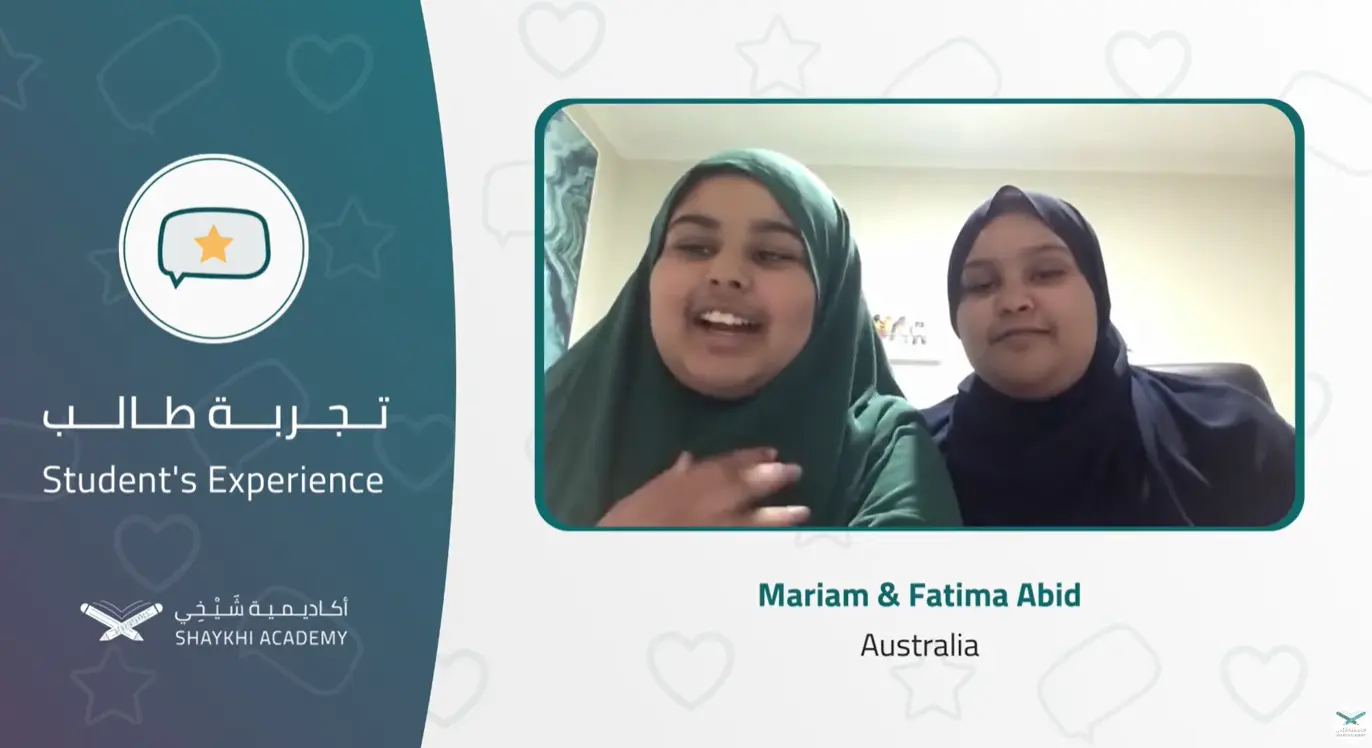
Mariam and Fatima
Mariam and Fatima

Mariam and Fatima

Quran and Tajweed

We are Mariam and Fatima from Australia and we have been learning Arabic, memorizing Quran and doing Tajweed in these classes for two years. We love these classes because they are very enjoyable and fun

2 Years
   

Serious Students of Islamic Law Deserve Rigorous Instruction Now

E Islamic Studies Academy’s comparative Fiqh course gives Tullab al-Ilm, Imams, and analytical Muslims the structured legal training to navigate scholarly differences with academic confidence and scholarly integrity.

Enroll in Comparative Fiqh Course Today            
           

Frequently Asked Questions About the Comparative Fiqh Course

Common questions from advanced students and Imams about E Islamic Studies Academy's comparative Fiqh course — covering prerequisites, scheduling, school coverage, and instructor qualifications.

Yes. E Islamic Studies Academy's scholars hold Al-Azhar certification and traditional Ijazah specifically in Fiqh and Usul al-Fiqh, with documented expertise in the classical legal schools and their methodologies.

Students should have prior grounding in foundational Fiqh. Classical scholars emphasized that Fiqh al-Ikhtilaf study begins only after a student develops firm proficiency in at least one school's legal texts and principles.

E Islamic Studies Academy's curriculum covers the Hanafi, Maliki, Shafi'i, and Hanbali schools — their founding Imams, legal methodologies, primary evidences, and points of agreement and scholarly divergence.

Yes. E Islamic Studies Academy assigns qualified female scholars for all comparative Fiqh sessions requested by sisters, conducted through a secure online platform with full privacy maintained throughout.

Yes. E Islamic Studies Academy's flexible scheduling accommodates Imams and community leaders across all Western time zones, with session times arranged around Friday Khutbah and other religious service obligations.

Yes. Prospective students can book one free trial session to assess the instructor's command of comparative Islamic jurisprudence and the curriculum's alignment with their current academic level before enrolling.
Send Message Free Trial