 Learning Islam
Have you ever opened the Quran looking for a step-by-step guide to salah and wondered why you couldn’t find one? Many students, parents, and new Muslims ask the same question: does Quran say how to pray, or does that knowledge come from somewhere else?
The answer is richer than a simple yes or no. The Quran speaks about prayer more than almost any other act of worship. It also leaves some details for the Prophet ﷺ to demonstrate.
In this guide, we answer “does Quran say how to pray” verse by verse: what the Quran describes, what it leaves to the Sunnah, and why the two work together.
What You Will Learn
- Does Quran say how to pray? Yes. It covers the obligation, times, call, purity, postures, qiblah, and spirit of salah.
- The Quran often names prayer by its parts: standing, bowing, prostrating, and recitation.
- The number of rak’ahs and the exact wording come from the Prophet ﷺ, whom the Quran commands us to follow.
- Learning from both sources with a qualified teacher is the surest way to pray correctly.
Does Quran Say How to Pray?
Yes, in principle and in many specifics, but not as a complete manual. The Quran sets the obligation, timing, purification, postures, and direction of prayer. The Prophet ﷺ showed the full method in practice.
Allah calls prayer “a decree of specified times” for the believers (An-Nisa 4:103). So does Quran say how to pray? It lays down the fixed framework, and the Prophet’s ﷺ example completes the form.
Why the Quran Mentions Prayer by Its Parts
The Quran often refers to prayer through one of its pillars. Fajr is called “Qur’an al-Fajr” because recitation is central to it (Al-Isra 17:78). Worshippers are described as “those who bow and prostrate” (9:112, 48:29).
Scholars such as al-Qurtubi and Rashid Rida explained that naming one pillar brings the whole prayer to the reader’s mind. So does the Quran mention how to pray? Its very vocabulary is built from the postures.
Live Class in Action
Watch how our instructors interact with students in real time, focusing on interactive methods.
Deepen Your Islamic Knowledge
Join our comprehensive online courses and learn from qualified scholars today.
Book Your Free TrialWhere Does It Say How to Pray in the Quran?
If you are wondering where it says how to pray in the Quran, the details are spread across dozens of verses. Here is how the Quran answers “does Quran say how to pray” in practice
The Five Daily Prayers and Their Times
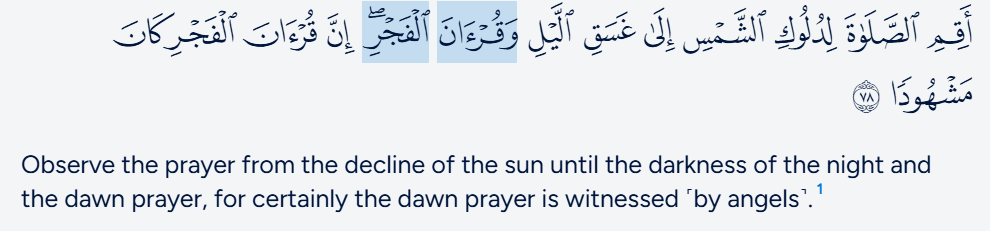
The Quran does not list the five prayers by name in a single verse. Instead, it spreads their times across several ayahs that follow the path of the sun from dawn to midday to nightfall. That way, every part of the day is tied to the remembrance of Allah. Allah commands prayer in Surah Al-Isra (17:78):
أَقِمِ ٱلصَّلَوٰةَ لِدُلُوكِ ٱلشَّمْسِ إِلَىٰ غَسَقِ ٱلَّيْلِ وَقُرْءَانَ ٱلْفَجْرِ ۖ إِنَّ قُرْءَانَ ٱلْفَجْرِ كَانَ مَشْهُودًا ٧٨
“Observe the prayer from the decline of the sun until the darkness of the night and the dawn prayer, for certainly the dawn prayer is witnessed ˹by angels˺.”
And in Surah Hud (11:114), most early commentators say the first “end of the day” is Fajr. The second end has been read as Dhuhr and Asr, or as Maghrib, and “the early part of the night” as Maghrib and Isha. The same verse continues, “Surely good deeds wipe out evil deeds,” which ties these prayers to Allah’s forgiveness. Allah says:
وَأَقِمِ ٱلصَّلَوٰةَ طَرَفَىِ ٱلنَّهَارِ وَزُلَفًا مِّنَ ٱلَّيْلِ ۚ
” Establish prayer ˹O Prophet˺ at both ends of the day and in the early part of the night.”
Fajr and Isha are named outright in Surah An-Nur (24:58). Allah also says, which shows there are more than three prayers, in Al-Baqarah 2:238)
حَـٰفِظُوا۟ عَلَى ٱلصَّلَوَٰتِ وَٱلصَّلَوٰةِ ٱلْوُسْطَىٰ وَقُومُوا۟ لِلَّهِ قَـٰنِتِينَ
“Observe the ˹five obligatory˺ prayers—especially the middle prayer—and stand in true devotion to Allah.”
The Call to Prayer (Adhan)
The Quran mentions the adhan directly. It also commands believers to hasten when the Friday call is made (Al-Jumu’ah 62:9).
” يَـٰٓأَيُّهَا ٱلَّذِينَ ءَامَنُوٓا۟ إِذَا نُودِىَ لِلصَّلَوٰةِ مِن يَوْمِ ٱلْجُمُعَةِ فَٱسْعَوْا۟ إِلَىٰ ذِكْرِ ٱللَّهِ ”
” O believers! When the call to prayer is made on Friday, then proceed ˹diligently˺ to the remembrance of Allah ”
The phrase “when the call to prayer is made” (nudiya lis-salah) refers to the adhan itself, which shows the call was already an established practice in the Prophet’s ﷺ time. Scholars of tafsir explain that “proceed” (fas’aw) means going with purpose and seriousness, not rushing in a disorderly way.
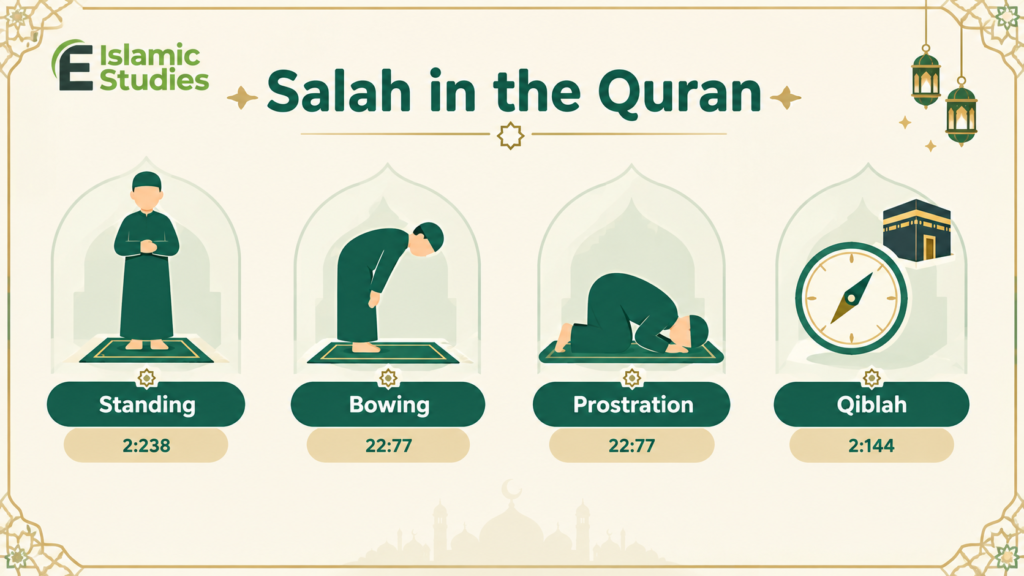
Standing, Bowing, and Prostration
Bowing and prostration are the best-known movements of salah, and the Quran names them directly. Through these postures, the believer lowers the head before Allah in complete humility.
يَـٰٓأَيُّهَا ٱلَّذِينَ ءَامَنُوا۟ ٱرْكَعُوا۟ وَٱسْجُدُوا۟ وَٱعْبُدُوا۟ رَبَّكُمْ وَٱفْعَلُوا۟ ٱلْخَيْرَ لَعَلَّكُمْ تُفْلِحُونَ ۩
“O believers! Bow down, prostrate yourselves, worship your Lord, and do ˹what is˺ good so that you may be successful.” (Surah Al-Hajj 22:77).
This verse brings together the two core physical acts of prayer, ruku’ and sujud, and links them to worship and good deeds. Standing is commanded separately in Al-Baqarah 2:238: “Stand in true devotion to Allah.” So does Quran say how to pray in terms of movement? Yes, it names the very postures of salah.
Recitation and Voice Level
Reciting the Quran is a central pillar of salah, so much so that Fajr is called “Qur’an al-Fajr.” Allah also guides believers on how loudly they should recite during prayer. Allah instructs in Al-Isra (17:110):
ٱلْحُسْنَىٰ ۚ وَلَا تَجْهَرْ بِصَلَاتِكَ وَلَا تُخَافِتْ بِهَا وَٱبْتَغِ بَيْنَ ذَٰلِكَ سَبِيلًا
“Do not be loud in your prayer nor silent, but seek a way between”
Ibn Abbas explained that this verse came down in Makkah, when the idolaters heard the Prophet’s ﷺ loud recitation and insulted the Quran (Sahih al-Bukhari 4722). Allah guided him to a middle tone: loud enough for those praying behind him, but not so loud that it provoked the idolaters. Muslims still recite aloud in some prayers and quietly in others, following the Prophet’s ﷺ practice.
Facing the Qiblah
In their early years in Madinah, Muslims prayed facing Jerusalem. This verse sets the direction of every Muslim’s prayer. Allah then changed the qiblah to the Kaaba in Makkah, a turning point recorded clearly in Surah Al-Baqarah.
فَوَلِّ وَجْهَكَ شَطْرَ ٱلْمَسْجِدِ ٱلْحَرَامِ ۚ
“Turn your face toward al-Masjid al-Haram, and wherever you are, turn your faces toward it” (Al-Baqarah 2:144).
For children, these verses are much easier to remember when a teacher links each posture to its ayah. That is how our Islamic classes for kids teach young learners to pray, one step at a time.
Does the Quran Mention How to Pray in a State of Purity?
Yes, in remarkable detail. Purity is a condition for a valid prayer, and on this point the answer to “does Quran say how to pray” is spelled out more precisely than most other rulings.
Wudu (Ablution)
The following Ayah is one of the Quran’s clearest step-by-step verses for how to do Wudu. it lists the steps: wash the face, wash the arms to the elbows, wipe the head, and wash the feet to the ankles.In Surah Al-Ma’idah (5:6) Allah says:
يَـٰٓأَيُّهَا ٱلَّذِينَ ءَامَنُوٓا۟ إِذَا قُمْتُمْ إِلَى ٱلصَّلَوٰةِ فَٱغْسِلُوا۟ وُجُوهَكُمْ وَأَيْدِيَكُمْ إِلَى ٱلْمَرَافِقِ وَٱمْسَحُوا۟ بِرُءُوسِكُمْ وَأَرْجُلَكُمْ إِلَى ٱلْكَعْبَيْنِ ۚ وَإِن كُنتُمْ جُنُبًا فَٱطَّهَّرُوا۟ ۚ وَإِن كُنتُم مَّرْضَىٰٓ أَوْ عَلَىٰ سَفَرٍ أَوْ جَآءَ أَحَدٌ مِّنكُم مِّنَ ٱلْغَآئِطِ أَوْ لَـٰمَسْتُمُ ٱلنِّسَآءَ فَلَمْ تَجِدُوا۟ مَآءً فَتَيَمَّمُوا۟ صَعِيدًا طَيِّبًا فَٱمْسَحُوا۟ بِوُجُوهِكُمْ وَأَيْدِيكُم مِّنْهُ ۚ
“ O believers! When you rise for prayer, wash your faces and your hands up to the elbows, wipe your heads, and wash your feet to the ankles. And if you are in a state of ˹full˺ impurity, then take a full bath. But if you are ill, on a journey, or have relieved yourselves, or have been intimate with your wives and cannot find water, then purify yourselves with clean earth by wiping your faces and hands.”
Ghusl and What Breaks Wudu
The same verse forbids approaching prayer in a state of major impurity until one bathes, or while intoxicated. They also name relieving oneself and intimate contact as things that require purifying again before prayer.
Tayammum (Dry Ablution)
The sick, the traveler, or anyone without water may wipe the face and hands with clean earth instead. The verse then adds, “Allah does not intend to make difficulty for you.”
This ruling shows the mercy built into salah. A valid excuse never cancels the prayer; it only makes the preparation easier. The verse ends by explaining that Allah “intends to purify you and complete His favour upon you, so perhaps you will be grateful.”
Experience Our Classrooms
Don’t just take our word for it—take a look inside! Watch the videos below to experience our engaging teaching methods and vibrant online classrooms firsthand.
Deepen Your Islamic Knowledge
Join our comprehensive online courses and learn from qualified scholars today.
Book Your Free TrialDoes the Quran Teach How to Pray in Special Situations?
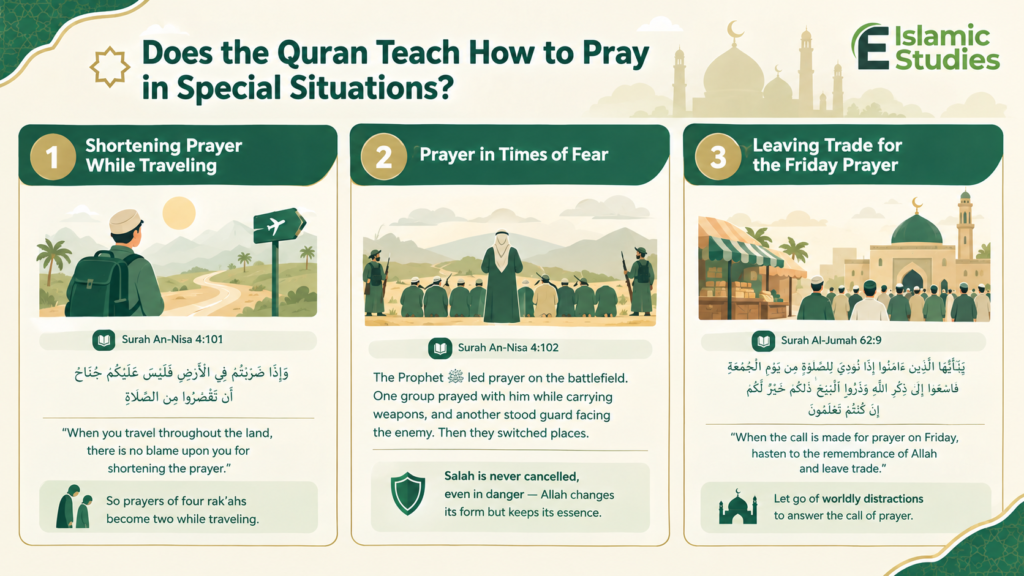
Yes. It does. The Quran says how to pray when life gets hard. It never drops salah; it only adjusts it to the circumstances.
1. Shortening Prayer While Traveling
The following verse is the basis of qasr, the shortened prayer for travelers. In (Surah An-Nisa 4:101). Allah says
وَإِذَا ضَرَبْتُمْ فِى ٱلْأَرْضِ فَلَيْسَ عَلَيْكُمْ جُنَاحٌ أَن تَقْصُرُوا۟ مِنَ ٱلصَّلَوٰةِ
“When you travel throughout the land, there is no blame upon you for shortening the prayer”
The verse first mentions shortening the prayer when there is fear of enemies, yet the Prophet ﷺ kept shortening his prayers on peaceful journeys too. When Umar asked him about it, he called it “a charity Allah has given you, so accept His charity” (Sahih Muslim 686). So prayers of four rak’ahs become two while traveling.
2. Prayer in Times of Fear
In Surah An-Nisa (4:102), Allah describes how the Prophet ﷺ led prayer on the battlefield. One group prayed behind him while carrying their weapons, and another group stood guard facing the enemy. The two groups then switched places so that each could pray with him.
This verse is the basis of Salat al-Khawf, the prayer of fear. It shows that salah is never cancelled, even in danger: Allah changes its form but keeps its essence. The verse also commands believers to stay alert and keep their weapons close while they pray.
3. Leaving Trade for the Friday Prayer
The Quran praises those whom “neither commerce nor sale distracts” from prayer. In Surah al-Jumah (62:9) Allah says:
يَـٰٓأَيُّهَا ٱلَّذِينَ ءَامَنُوٓا۟ إِذَا نُودِىَ لِلصَّلَوٰةِ مِن يَوْمِ ٱلْجُمُعَةِ فَٱسْعَوْا۟ إِلَىٰ ذِكْرِ ٱللَّهِ وَذَرُوا۟ ٱلْبَيْعَ ۚ ذَٰلِكُمْ خَيْرٌ لَّكُمْ إِن كُنتُمْ تَعْلَمُونَ
“When the call is made for prayer on Friday, hasten to the remembrance of Allah and leave trade”.
Does the Quran Teach You How to Pray With the Heart?
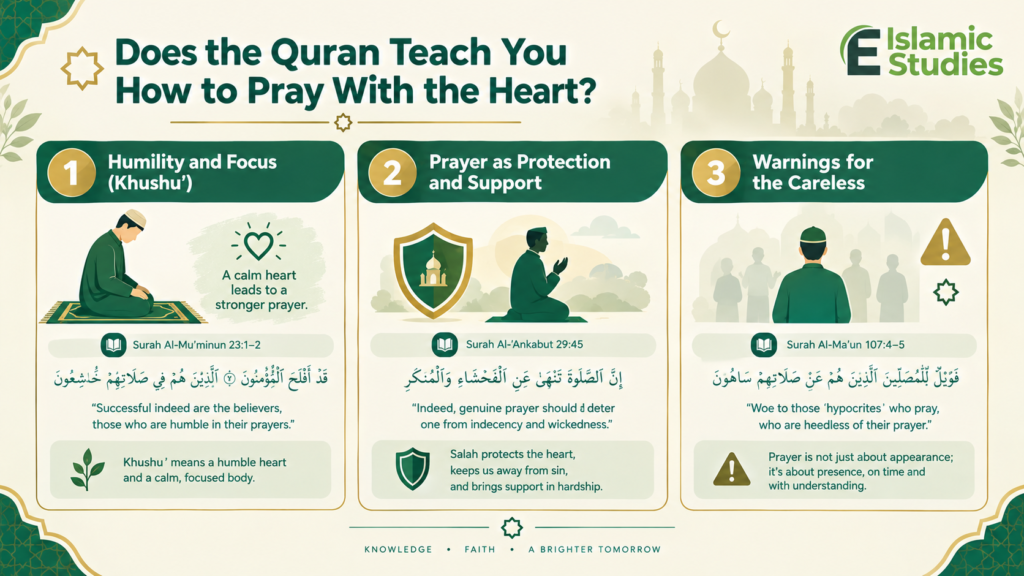
Yes, and this may be its greatest emphasis. When we ask does Quran says how to pray, the answer includes the heart, not only the body. A prayer performed correctly but absent-mindedly misses much of its purpose.
1. Humility and Focus (Khushu’)
Khushu’ is the soul of salah. It means a heart that is present and humble, and a body that is calm and still before Allah. Allah opens Surah Al-Mu’minun (23:1–2) by linking success to it: (Al-Mu’minun 23:1–2):
قَدْ أَفْلَحَ ٱلْمُؤْمِنُونَ ١ ٱلَّذِينَ هُمْ فِى صَلَاتِهِمْ خَـٰشِعُونَ ٢
“Successful indeed are the believers, those who are humble in their prayers”
Allah names khushu’ as the very first quality of the successful believers, before charity and the other good deeds listed after it. Scholars describe it as stillness of the limbs and presence of the heart. That is why the Prophet ﷺ taught believers to pray calmly, with focus and with understanding of what they recite.
2. Prayer as Protection and Support
Prayer prohibits immorality and wrongdoing, and good deeds remove misdeeds. In hardship, Allah tells us to seek help through patience and prayer. In (Al-‘Ankabut 29:45)
إِنَّ ٱلصَّلَوٰةَ تَنْهَىٰ عَنِ ٱلْفَحْشَآءِ وَٱلْمُنكَرِ ۗ
Indeed, ˹genuine˺ prayer should deter ˹one˺ from indecency and wickedness.
The same verse adds, “The remembrance of Allah is ˹an˺ even greater ˹deed˺.” A sincere, focused prayer trains the heart to avoid sin outside the prayer as well. In Al-Baqarah (2:45), Allah also says, “And seek help through patience and prayer,” which makes salah a daily source of strength.
3. Warnings for the Careless
The Quran does not only praise those who pray; it also warns those who treat prayer carelessly. Surah Al-Ma’un describes people who pray outwardly but neglect its timing and meaning:
فَوَيْلٌ لِّلْمُصَلِّينَ ٤ ٱلَّذِينَ هُمْ عَن صَلَاتِهِمْ سَاهُونَ ٥
“Woe to those ˹hypocrites˺ who pray, who are heedless of their prayer” (107:4–5). The hypocrites are described as standing for prayer lazily, only to be seen by people.
Understanding these meanings changes how you stand before Allah. Our Online Tafseer Course takes students through the verses on salah so that every word you recite carries meaning.
Where in the Quran Does It Say How to Pray Each Rak’ah?
Nowhere in direct detail. The number of rak’ahs, the words of the tashahhud, and the exact order of movements are not listed in the Quran. They come from the Prophet ﷺ.
So does Quran say how to pray down to each rak’ah? No. Imam al-Kasani noted that the Quran’s texts are brief about quantities, and the Prophet’s ﷺ example explained them, as with zakat and Hajj.
The Quran Commands Us to Learn From the Prophet ﷺ
The Quran itself tells us where to find the missing details of prayer. Allah describes the Prophet ﷺ as a teacher who explains the Book and shows believers what they did not know: In (Surah Al-Baqarah 2:151),
كَمَآ أَرْسَلْنَا فِيكُمْ رَسُولًا مِّنكُمْ يَتْلُوا۟ عَلَيْكُمْ ءَايَـٰتِنَا وَيُزَكِّيكُمْ وَيُعَلِّمُكُمُ ٱلْكِتَـٰبَ وَٱلْحِكْمَةَ وَيُعَلِّمُكُم مَّا لَمْ تَكُونُوا۟ تَعْلَمُونَ ١٥١
sent a Messenger who “teaches you the Book and wisdom and teaches you what you did not know” (in Surah Al-Baqarah 2:151).
“Pray as You Have Seen Me Praying”
Aisha (RA) reported that prayer was first prescribed as two rak’ahs, and that it was later increased for residents (Bukhari 350). The Prophet ﷺ said,
وَصَلُّوا كَمَا رَأَيْتُمُونِي أُصَلِّي
“Pray as you have seen me praying” (Sahih al-Bukhari 631).
An Unbroken Chain of Practice
Ibn Qudamah and Ibn Rushd recorded that Muslims agree on five prayers at five fixed times. Generation after generation has prayed the same 17 obligatory rak’ahs a day, passed from teacher to student since the Prophet’s ﷺ time.
That chain from teacher to student is still the best way to learn. If you are starting from the basics, our Learn Islam for Beginners program and Islamic Classes for Adults teach salah from the Quran and Sunnah together.
Start Praying With Confidence: Book Your Free Trial Class Today
Knowing whether the Quran says how to pray is the first step; praying correctly is the goal. At eIslamic Studies Academy, qualified teachers with ijazah teach salah from the Quran and the authentic Sunnah.
Classes are fully online, with flexible schedules for kids, adults, sisters, and new Muslims. Every lesson moves at your pace, from wudu to the final tasleem.
Our Islamic Courses
- Islam Classes for Adults
- Islam Classes for Sisters
- Alimah Course for Ladies
- Islam Classes for Kids
- Learn Islam for Beginners
- Learning Islam for New Converts
Book your free trial lesson today and meet your tutor. In one session, you’ll see how clear salah becomes when the Quran and Sunnah are taught together.
Deepen Your Islamic Knowledge
Join our comprehensive online courses and learn from qualified scholars today.
Book Your Free TrialConclusion
So, does Quran say how to pray? It gives the foundations: five prayers at fixed times, the adhan, wudu, ghusl, tayammum, standing, bowing, prostration, recitation, the qiblah, and the rules for travel and times of fear.
It also shapes the heart of prayer through khushu’, through prayer’s protection from sin, and through its warnings to the careless. What it leaves undetailed, like the number of rak’ahs, it entrusts to the Prophet ﷺ, and it commands us to follow him.
The key takeaway: does Quran say how to pray? It lays the foundation, and the Sunnah completes it. Learn both together with a trusted teacher, and your prayer will rest on solid ground.
FAQs
Here are quick answers to questions people often ask alongside “does Quran say how to pray.”
Does the Quran say how many times to pray a day?
The Quran points to five prayer times in verses such as 17:78, 11:114, and 30:17–18, and it names Fajr and Isha in 24:58. The Prophet’s ﷺ practice and the agreement of Muslims confirm five daily prayers.
Can you learn how to pray from the Quran alone?
Not completely. Does Quran say how to pray in every detail? No. The number of rak’ahs comes from the Sunnah, and the Quran itself commands us to follow the Prophet ﷺ (2:151).
What does the Quran say about wudu before prayer?
Surah Al-Ma’idah 5:6 commands washing the face, washing the arms to the elbows, wiping the head, and washing the feet to the ankles. It also allows tayammum when water is not available.
Why doesn’t the Quran list the number of rak’ahs?
The Quran often states principles and leaves their explanation to the Prophet ﷺ, as with zakat and Hajj. He taught the number of rak’ahs by example, saying, “Pray as you have seen me praying.”
How can kids learn to pray correctly?
Kids learn best through repetition, gentle correction, and linking each movement to its meaning. A structured online class with a patient teacher helps them build the habit early.







Leave a Reply