 Learning Islam
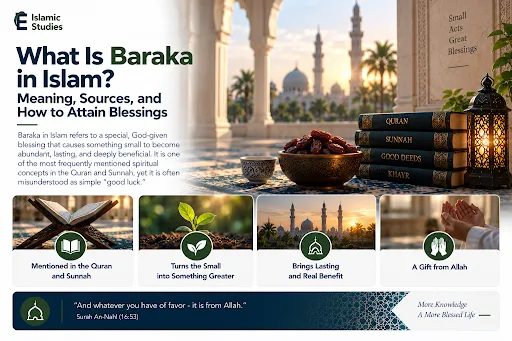
Baraka in Islam refers to a special, God-given blessing that causes something small to become abundant, lasting, and deeply beneficial.
It is one of the most frequently mentioned spiritual concepts in the Quran and Sunnah, yet it is often misunderstood as simple “good luck.”
Understanding barakah helps a Muslim recognize why some people accomplish more in a short lifetime than others do in a long one, why a modest income can feel sufficient while a large one feels empty, and why certain times, places, and acts of worship carry weight far beyond their outward size.
Resources like the E Islamic Studies Academy offer structured courses on Quran, Islamic ethics, and spiritual development.
Takeaways — What You Will Learn
• The precise linguistic and Islamic meaning of baraka (barakah)
• How the Quran uses the concept of blessings in Islam and in which contexts
• The main sources and locations where baraka is described in revelation
• The authentic means of attaining barakah in wealth, time, and family life
• Common misunderstandings to avoid when seeking blessings in Islam
What Is Baraka in Islam?
Baraka in Islam is the fixed and abundant divine good that Allah places in something, causing it to increase, endure, and benefit far beyond its apparent size.
A person may have little wealth yet live comfortably, or little time yet accomplish a great deal; this is barakah at work.
The renowned Quranic scholar Al-Raghib al-Isfahani defined baraka precisely as “the fixed presence of divine good in a thing” (ثبوت الخير الإلهي في الشيء).
Imam Ibn al-Qayyim explained that its core meaning is stability, attachment, and permanence, while also carrying the sense of growth and multiplication. In practical terms, when Allah places barakah in something, its benefit outlasts and outweighs its outward measure.
Baraka in the Quran
The root ب-ر-ك appears in the Quran roughly 32 times, in forms such as the verb (بارك), the verbal noun (بركة), and the passive participle (مبارك).
It is used to describe Allah Himself, the Quran, the Ka’bah, the land of Sham, Bayt al-Maqdis, and the righteous.
| Arabic Term | Root Meaning | Relation to Baraka |
| Thabat (ثبات) | Firmness, permanence | Close, but narrower — used mainly for physical steadiness |
| Ziyadah (زيادة) | Increase | Part of baraka’s meaning, but not every increase is baraka |
| Nama’ (نماء) | Growth | Similar, though baraka is always understood to come from Allah |
| Qaht (قحط) | Drought, withholding of good | The opposite of baraka |
Baraka Is Attributed to Allah and to What He Blesses
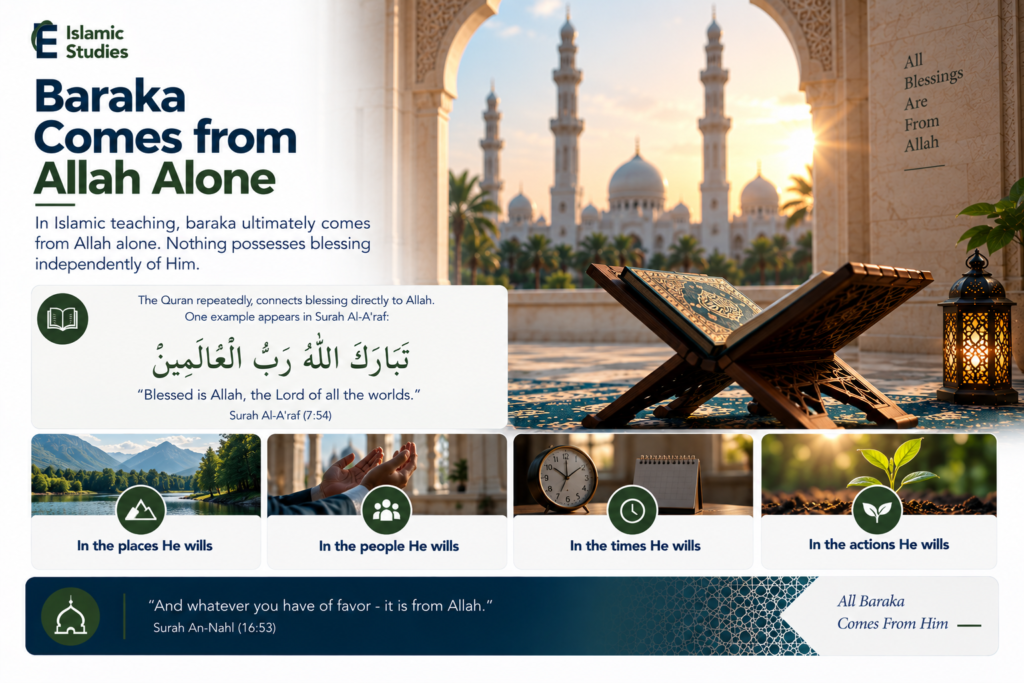
In Islamic teaching, baraka ultimately comes from Allah alone. Nothing possesses blessing independently of Him, and no person, place, object, time, or action can create baraka by itself.
Rather, Allah is the One who grants blessing, places it where He wills, and causes particular things to become sources of increased goodness and benefit.
This principle is essential for understanding baraka correctly and distinguishing the Islamic concept of divine blessing from ideas of luck, superstition, or supposedly independent spiritual power.
The Quran repeatedly connects blessing directly to Allah. One example appears in Surah Al-A’raf:
تَبَارَكَ اللَّهُ رَبُّ الْعَالَمِينَ
“Blessed is Allah, Lord of all worlds.”
Where Does Baraka Come From? Sources of Blessing in Islam
Understanding where baraka comes from in Islam is essential because blessing is not something a believer should search for randomly or associate with anything that simply feels spiritually meaningful.
In Islamic teaching, barakah has a clear foundation: it ultimately comes from Allah, who grants blessing according to His wisdom and places increased goodness, benefit, and lasting value wherever He wills.
This understanding also helps correct the common tendency to measure blessing only by outward abundance. Baraka is not necessarily about having more money, possessions, opportunities, or time.
Sometimes its presence is recognized through sufficiency, lasting benefit, beneficial results, peace, or the ability to accomplish meaningful good with relatively limited resources. What appears small in quantity may carry enormous benefit when Allah places baraka within it.
For this reason, recognizing barakah requires looking beyond appearances. Two people may possess similar resources yet experience very different levels of benefit from them.
The same amount of time, knowledge, wealth, or effort can produce very different outcomes. From an Islamic perspective, this reminds the believer that beneficial results are not determined by quantity and human effort alone; ultimately, all goodness remains dependent upon Allah.
Baraka in the Quran Itself
The Quran describes itself as a blessed book whose benefit is found in its wording, its meanings, and its effects on those who reflect upon it.
A believer who studies it with understanding gains insight and tranquility that others do not. Structured, guided study such as the courses offered through the beginner Islamic classes at E Islamic Studies Academy helps new learners approach the Quran’s meanings correctly from the start.

Baraka in Sacred Places and Times
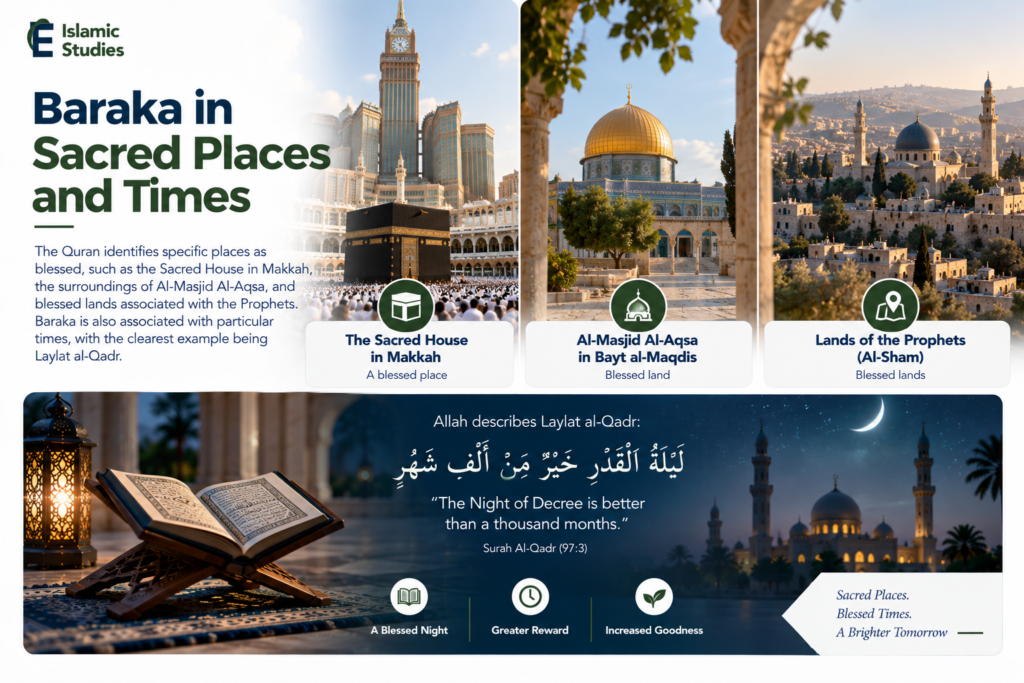
The Quran identifies specific places as blessed. The Sacred House in Makkah is described as mubarak, while the surroundings of Al-Masjid Al-Aqsa in Bayt al-Maqdis are explicitly described as land that Allah has blessed.
The Quran also refers to blessed lands associated with the Prophets, traditionally understood to include the region of Al-Sham. These places hold significance because of their connection to worship, revelation, and the history of prophethood.
Baraka is also associated with particular times. The Quran gives the clearest example in Laylat al-Qadr, declaring:
لَيْلَةُ الْقَدْرِ خَيْرٌ مِّنْ أَلْفِ شَهْرٍ
“The Night of Glory is better than a thousand months.”
Baraka in a Person’s Wealth, Time, and Family
Barakah also touches ordinary life: a household where income feels sufficient despite being modest, a lifespan spent mostly in worship and good deeds, and children raised to become a lasting source of good for their parents.
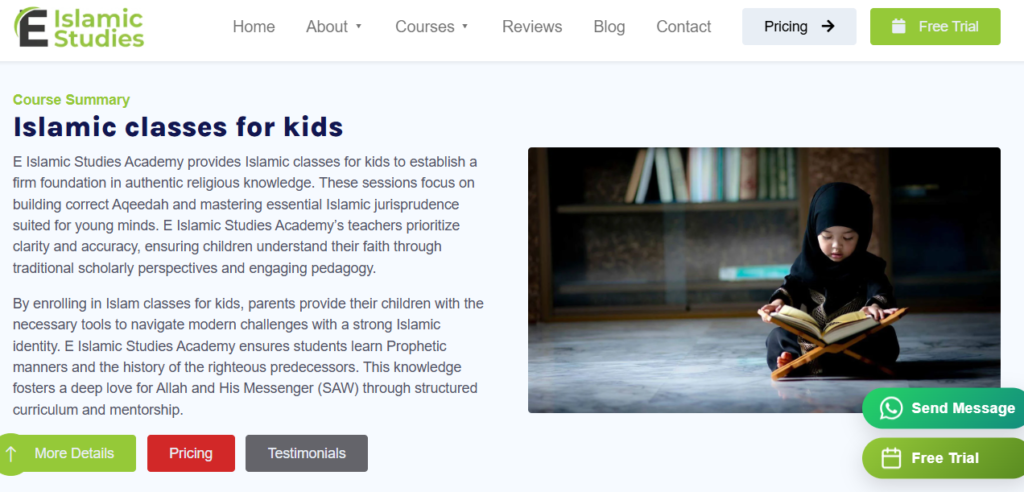
This is one reason many parents seek early, structured Islamic education for their children, such as the Islamic classes for kids, so that good habits and correct intentions (niyyah) are instilled from a young age.
See Our Islamic Studies Classes in Action
Take a look at a sample lesson and see how our interactive online classes help students learn Islamic Studies in a clear, engaging, and supportive environment.
Deepen Your Islamic Knowledge
Join our comprehensive online courses and learn from qualified scholars today.
Book Your Free TrialHow to Attain Baraka in Islam
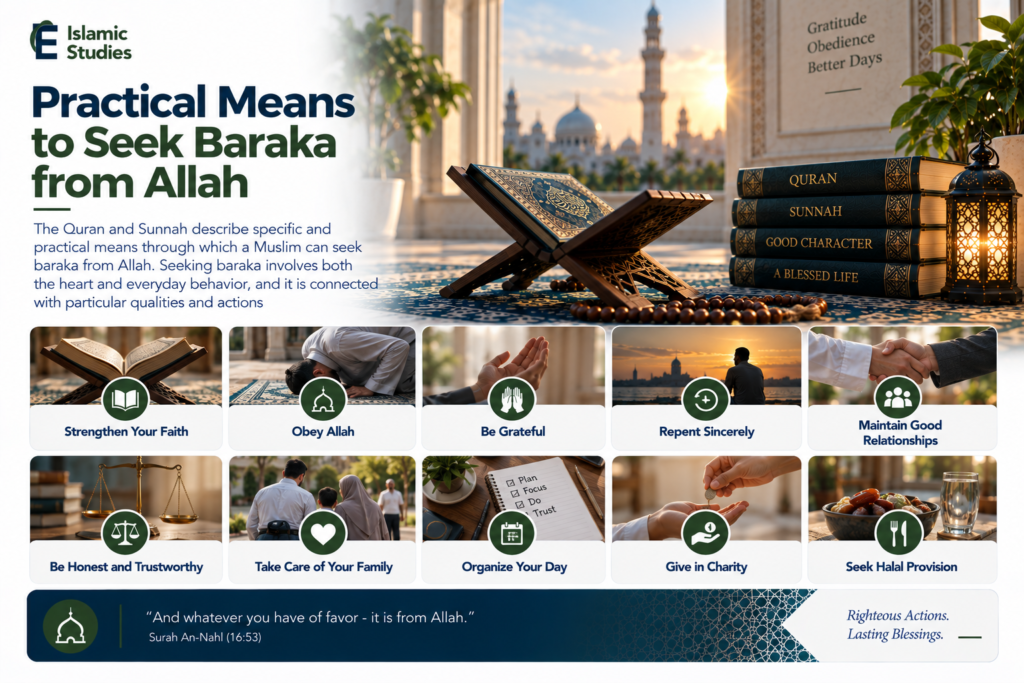
The Quran and Sunnah describe specific and practical means through which a Muslim can seek baraka from Allah. Blessing is not presented as something obtained through vague spiritual feelings, superstition, or simply wishing for better circumstances.
Rather, Islamic teachings connect barakah with particular qualities and actions that shape a believer’s relationship with Allah and with other people.
Seeking baraka therefore involves both the heart and everyday behavior. Faith, obedience, gratitude, repentance, honesty, family relationships, and even the way a person organizes their day can become means through which Allah places greater goodness and benefit in life.
These teachings also remind the believer that baraka is not necessarily measured by having more; it may appear as greater benefit, sufficiency, stability, productivity, or lasting goodness in what Allah has already provided.
1. Taqwa (God-Consciousness) and Trust in Allah
Taqwa means living with awareness of Allah by obeying His commands, avoiding what He has prohibited, and remaining conscious that one’s choices are known to Him. The Quran establishes a particularly strong connection between iman, taqwa, and the opening of blessings.
وَلَوْ أَنَّ أَهْلَ الْقُرَىٰ آمَنُوا وَاتَّقَوْا لَفَتَحْنَا عَلَيْهِم بَرَكَاتٍ مِّنَ السَّمَاءِ وَالْأَرْضِ وَلَٰكِن كَذَّبُوا فَأَخَذْنَاهُم بِمَا كَانُوا يَكْسِبُونَ
“And if only the people of the cities had believed and feared Allah, We would have opened upon them blessings from heaven and the earth; but they denied [the messengers], so We seized them for what they were earning.”
This verse ties barakah directly to two foundational qualities: genuine faith (iman) and taqwa. It demonstrates that a believer’s spiritual condition is not disconnected from the blessings they seek in everyday life.
Taqwa encourages a Muslim to choose what pleases Allah even when another path appears easier or more immediately profitable.
It also changes the way a person responds to uncertainty. Rather than compromising religious principles out of fear of losing wealth, opportunities, or status, the believer combines responsible effort with trust in Allah.
Cultivating this inward state rather than focusing exclusively on outward religious practice is an important part of tazkiyah, the process of purifying and developing the heart explored in resources such as the tazkiyya essentials course.

2. Truthfulness and Honesty in Business Dealings
Baraka is not limited to acts that appear explicitly devotional. The Sunnah connects blessing directly with truthfulness and transparency in ordinary financial transactions.
The Prophet ﷺ taught that honesty between a buyer and seller can become a cause of blessing, while lying and concealing important information can remove that blessing.
عَنْ حَكِيمِ بْنِ حِزَامٍ رضي الله عنه، عَنِ النَّبِيِّ ﷺ قَالَ:
«الْبَيِّعَانِ بِالْخِيَارِ مَا لَمْ يَتَفَرَّقَا، فَإِنْ صَدَقَا وَبَيَّنَا بُورِكَ لَهُمَا فِي بَيْعِهِمَا، وَإِنْ كَذَبَا وَكَتَمَا مُحِقَتْ بَرَكَةُ بَيْعِهِمَا».
Hakim ibn Hizam (may Allah be pleased with him) reported that the Prophet ﷺ said:
“The seller and the buyer have the option of cancelling or confirming the bargain as long as they have not parted; and if both speak the truth and make things clear, they will be blessed in their transaction. But if they lie and conceal something, the blessing of their transaction will be wiped out.”
Sahih al-Bukhari 2079 and Sahih Muslim 1532
This hadith demonstrates that financial profit and barakah are not necessarily the same thing. A dishonest transaction might produce an immediate material gain, but the Prophet ﷺ warns that deception can remove its blessing.
By contrast, truthful disclosure and fair dealing become causes through which Allah places baraka in a transaction.
Readers curious about how qualified scholars reach such conclusions can find a clear introduction in this article on ijtihad in Islam.
3. Maintaining Family Ties (Silat al-Rahim)
Maintaining relationships with relatives, known as silat al-rahim, is another action associated with increased provision and lifespan in the Sunnah. This includes keeping appropriate contact, showing kindness, offering assistance when possible, and avoiding unnecessary severance of family relationships.
Silat al-rahim can take many forms depending on circumstances: visiting relatives, checking on them, offering financial or practical assistance, maintaining communication, showing respect, and working toward reconciliation when appropriate.
عَنْ أَنَسِ بْنِ مَالِكٍ رضي الله عنه قَالَ: سَمِعْتُ رَسُولَ اللَّهِ ﷺ يَقُولُ:
«مَنْ سَرَّهُ أَنْ يُبْسَطَ لَهُ فِي رِزْقِهِ، أَوْ يُنْسَأَ لَهُ فِي أَثَرِهِ، فَلْيَصِلْ رَحِمَهُ».
Anas ibn Malik (may Allah be pleased with him) reported that the Messenger of Allah ﷺ said:
“Whoever would like his provision to be expanded and his lifespan to be extended, let him maintain the ties of kinship.”
Sahih al-Bukhari 2067 and Sahih Muslim 2557
The hadith connects something deeply spiritual with something highly practical. Maintaining family relationships is not merely a matter of social etiquette; it is an act of obedience associated with goodness in a person’s provision and life.
Read Also: niyyah in Islam
4. Gratitude (Shukr)
Shukr, or gratitude, is another important means of preserving and increasing Allah’s blessings. Islamic gratitude goes beyond simply saying Alhamdulillah. It includes recognizing blessings within the heart, praising Allah for them with the tongue, and using what He has provided in ways that please Him.
Allah says:
وَإِذْ تَأَذَّنَ رَبُّكُمْ لَئِن شَكَرْتُمْ لَأَزِيدَنَّكُمْ ۖ وَلَئِن كَفَرْتُمْ إِنَّ عَذَابِي لَشَدِيدٌ
“And [remember] when your Lord proclaimed: ‘If you are grateful, I will surely increase you; but if you are ungrateful, surely My punishment is severe.’”
The promise “I will surely increase you” teaches the believer to respond to blessings with gratitude rather than entitlement. Instead of constantly focusing on what is missing, shukr trains the heart to recognize what Allah has already provided and to use those blessings responsibly.
Gratitude can therefore be practiced with wealth, knowledge, health, family, opportunities, and time. A person shows gratitude for knowledge by using and sharing it beneficially, for example, and gratitude for wealth by earning and spending it lawfully.
In this way, shukr becomes an active way of seeking continued goodness rather than merely an emotion.
Build your Aqeedah with qualified scholars today
Read Also: What Is Riya in Islam?
5. Istighfar (Seeking Forgiveness)
The Quran also connects istighfar—seeking Allah’s forgiveness—with forms of worldly provision and increase. Prophet Nuh (peace be upon him) called his people to seek forgiveness and described the blessings Allah could send upon them.
فَقُلْتُ اسْتَغْفِرُوا رَبَّكُمْ إِنَّهُ كَانَ غَفَّارًا يُرْسِلِ السَّمَاءَ عَلَيْكُم مِّدْرَارًا وَيُمْدِدْكُم بِأَمْوَالٍ وَبَنِينَ وَيَجْعَل لَّكُمْ جَنَّاتٍ وَيَجْعَل لَّكُمْ أَنْهَارًا
“I said: ‘Ask forgiveness of your Lord; indeed, He is ever a Perpetual Forgiver. He will send [rain from] the sky upon you in continuous showers, and give you increase in wealth and children, and provide for you gardens, and provide for you rivers.’”
These verses show that istighfar is not simply a phrase repeated after committing an obvious sin. It is part of a believer’s ongoing relationship with Allah: recognizing shortcomings, asking for forgiveness, and repeatedly returning to Him.
Read Also: What Is Ihsan in Islam?
6. Starting the Day Early
The Sunnah also associates the early part of the day with barakah. Rather than allowing the first hours of the morning to disappear unnecessarily, Muslims are encouraged to recognize their value for worship, work, study, and other beneficial activities.
The Prophet’s ﷺ supplication gives the early hours a special significance for Muslims. Beginning the day with Fajr, remembrance of Allah, and beneficial activity can help establish a rhythm in which spiritually important responsibilities are not pushed aside by the demands of the rest of the day.
عَنْ صَخْرٍ الْغَامِدِيِّ رضي الله عنه، عَنِ النَّبِيِّ ﷺ قَالَ:
«اللَّهُمَّ بَارِكْ لِأُمَّتِي فِي بُكُورِهَا».
Sakhr al-Ghamidi (may Allah be pleased with him) reported that the Prophet ﷺ said:
“O Allah, bless my nation in its early mornings.”
Sunan Abi Dawud 2606 and Jami’ at-Tirmidhi 1212
Understanding the wording and purpose of the call to prayer itself explained further in this guide to the meaning of the adhan’s words helps a Muslim appreciate why the early hours of the day are treated as especially blessed.
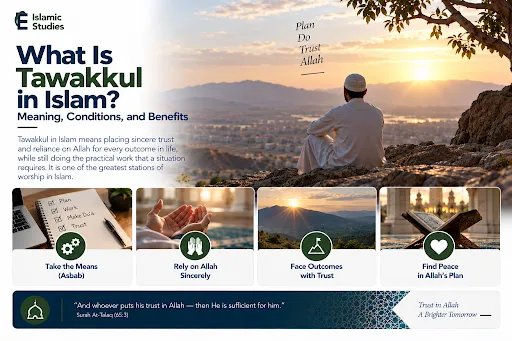
Read Also: What Is Tawakkul in Islam?
Watch a Sample Islamic Studies Class
See how our teachers explain Islamic concepts in an engaging and easy-to-understand way, helping students build knowledge and confidence.
Deepen Your Islamic Knowledge
Join our comprehensive online courses and learn from qualified scholars today.
Book Your Free TrialDeepen Your Understanding With Guided Islamic Learning
Reading about baraka is a strong first step, but understanding the Quran and Sunnah in proper context is best done with qualified teachers. The E Islamic Studies Academy offers structured, live online classes in Quran, Arabic, and Islamic studies for students of all ages and backgrounds including dedicated tracks for absolute beginners and for children.
Book a free trial class to experience a session firsthand before committing to a full course.
Our Islamic Courses
- Islam Classes for Adults
- Islam Classes for Sisters
- Alimah Course for Ladies
- Islam Classes for Kids
- Learn Islam for Beginners
- Learning Islam for New Converts
Conclusion
Baraka in Islam is the fixed, abundant, divine good that Allah places in a person’s wealth, time, family, and worship causing what is outwardly small to become sufficient, lasting, and deeply beneficial.
The Quran and authentic Sunnah tie this blessing to specific, learnable causes: taqwa, honesty, gratitude, istighfar, maintaining family ties, and valuing time — especially its early hours. Seeking barakah is therefore not passive; it is built through consistent, sincere action rooted in revelation rather than custom or superstition.
Frequently Asked Questions
What does baraka mean in Islam?
Baraka means the fixed presence of divine good in something, causing it to increase, last, and benefit beyond its apparent size. It comes from the Arabic root related to a birkah (pool), reflecting the ideas of permanence and increase.
How can a Muslim get barakah in their income?
The Quran and Sunnah tie barakah in income to taqwa, honesty in transactions, avoiding riba (usury) and deception, and giving in charity. Sahih al-Bukhari 2079 specifically links truthful, transparent trading to blessing in a sale.
Is baraka the same as luck?
No. Baraka is understood in Islam as coming directly from Allah’s decree in response to specific causes described in revelation, not as random chance or luck, which has no basis in Islamic belief.
Can baraka be lost?
Yes. The Quran and Sunnah describe barakah as something that can be removed through sin, dishonesty, and heedlessness — for example, Sahih al-Bukhari 2079 states that lying or concealment in a business deal wipes out the blessing of that transaction.
Which times of day are described as blessed in the Sunnah?
The early morning hours are specifically mentioned in a supplication of the Prophet ﷺ recorded in Sunan Abi Dawud 2606, and Friday and Ramadan are also described in the Sunnah as times of increased blessing.






Leave a Reply