 Learning Islam
Have you ever made wudu before sunrise, then stopped because you weren’t sure which rakats come first? You are not alone. New Muslims, parents, and adults returning to their deen often ask how to pray Fajr correctly.
This guide explains how to pray Fajr from start to finish, based on the Sunnah and trusted scholars. We cover the Sunnah and Fard rakats, what to say in each position, and the rulings for men and women.
By the end, you can pray with confidence at home or in the masjid, and teach your family too.
Key Takeaways
Here is what you will learn about how to pray Fajr:
- Fajr is four rakats in total: 2 Sunnah rakats, then 2 Fard rakats.
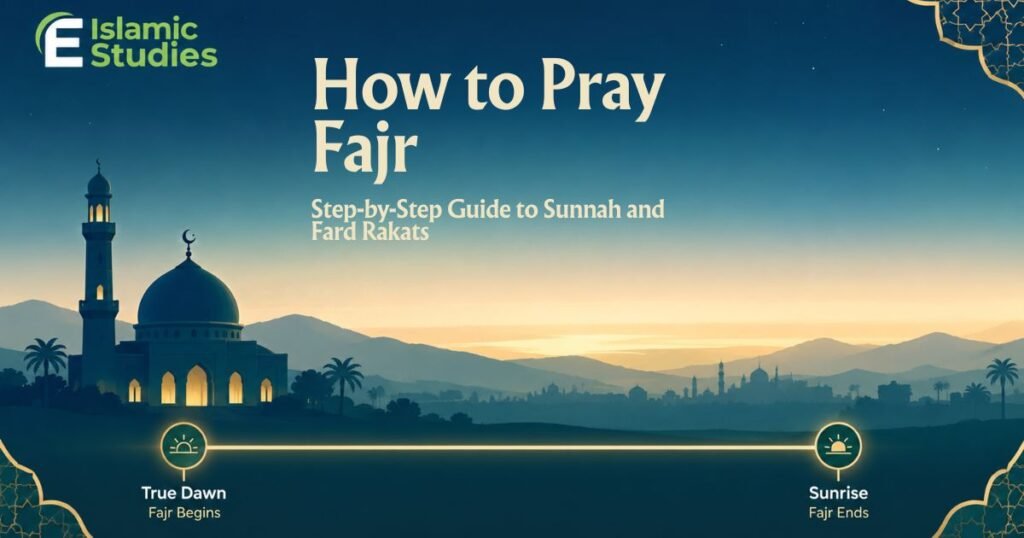
- Its time begins at true dawn and ends at sunrise.
- The Sunnah is light and recited silently; the Fard is recited aloud.
- Men and women pray Fajr the same way, with a few dress and congregation rulings.
- You can pray Fajr at home alone, following the same steps.
Step 1: Prepare for Prayer
Make wudu, cover your awrah, and stand on a clean spot facing the Qiblah, intending the Fard of Fajr in your heart. Deep sleep breaks wudu, so renew it after you wake up, even if you made it before bed. Then take a moment to calm your mind and set aside the day’s worries before you raise your hands for takbir.
If you’re unsure of the Qiblah direction, use a trusted compass app or ask a local. Make sure your body, clothes, and prayer spot are free of impurity, because getting these conditions right is the foundation of how to pray Fajr correctly.
For men, the minimum awrah is from the navel to the knees, and covering the shoulders is also recommended. For women, it is the whole body except the face and hands, so wear loose clothes that you can’t see through before you begin.
Step 2: Takbirat al-Ihram
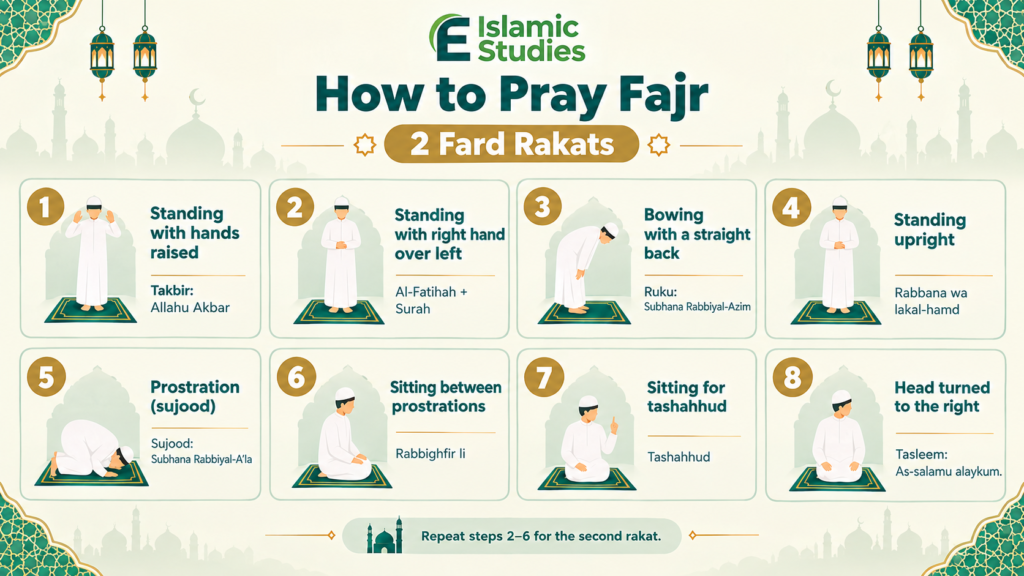
Raise your hands to shoulder or ear level and say “Allahu Akbar.” Then place your right hand over your left on your chest. This opening takbir is a pillar of the prayer, so say it with your tongue, not only in your heart. Without it, neither the Sunnah nor the Fard is valid. Keep your fingers together and your palms facing the Qiblah as you raise them.
Once you say “Allahu Akbar,” talking, eating, and anything else outside the prayer is not allowed until you give the salam. Keep your gaze on the place where you will prostrate, which helps your heart stay present from the first word.
Say the takbir in Arabic exactly as “Allahu Akbar,” even if you are new to the language. Placing the hands on the chest comes from a well-known narration. Other schools place them on or below the navel, and scholars accept these differences.
Step 3: The First Rakat
Quietly say the opening dua: “Subhanakal-lahumma wa bihamdika, wa tabarakas-muka, wa ta’ala jadduka, wa la ilaha ghayruk.” Then seek refuge in Allah and say Bismillah silently.
Recite Al-Fatihah aloud, followed by a surah or some verses. The Prophet ﷺ recited long passages in Fajr, but any portion you know is valid.
Say “Allahu Akbar” and bow (ruku), with your hands on your knees and back straight. Say “Subhana Rabbiyal-Azim” three times or more.
Rise saying “Sami’allahu liman hamidah,” then, standing still, say “Rabbana wa lakal-hamd.”
Say “Allahu Akbar” and go into sujood on seven bones: forehead with nose, both palms, both knees, and the toes. Say “Subhana Rabbiyal-A’la” three times or more.
Rise saying “Allahu Akbar,” sit calmly, and say “Rabbighfir li.” Then perform the second sujood exactly like the first.
Step 4: The Second Rakat
Stand up saying “Allahu Akbar.” Repeat everything from the first rakat (Al-Fatihah, a surah, ruku, standing, and two sujood) without the opening dua.
The Prophet ﷺ used to make the first rakat of Fajr longer and the second one shorter (Sahih al-Bukhari 759). This is the last rakat of Fajr, so don’t stand up again after its second sujood. Stay seated for the final tashahhud.
In the Shafi’i school, a short dua called Qunut is recited in this rakat after rising from ruku. Other scholars keep it for times of hardship facing the Ummah, so follow the practice of your local masjid or teacher.
Step 5: Final Tashahhud and Tasleem
After the second sujood, sit and recite the Tashahhud: “At-tahiyyatu lillahi was-salawatu wat-tayyibat…” up to the two testimonies, then send salawat on the Prophet ﷺ with Salat Ibrahimiyyah.
Before ending, seek refuge in Allah from the punishment of Hell, the punishment of the grave, the trials of life and death, and the trial of the Dajjal.
Turn your head to the right, saying “As-salamu alaykum wa rahmatullah,” then to the left, saying the same. Your Fajr prayer is now complete.
How to Pray Fajr: The Basics
These basics answer most beginner questions about how to pray Fajr before you learn the movements. Fajr (also called Salat al-Subh) is the first of the five daily obligatory prayers. It is obligatory on every adult Muslim and stays two rakats even when traveling.
The Prophet ﷺ called Fajr and Isha the heaviest prayers on the hypocrites, and he said that whoever prays Fajr is under the protection of Allah.
When Does Fajr Time Start and End?
Fajr time starts at true dawn (al-fajr al-sadiq), when white light spreads across the horizon, and ends at sunrise. Check a reliable local timetable. If two adhans are called, pray the Sunnah after the second, since praying before true dawn does not count.
How to Pray Fajr: Rakats
Knowing how to pray Fajr rakats in the right order is the first step. The dawn prayer has two parts, each with its own ruling. Fajr has four rakats in total. The first two are the Sunnah (Ratibah) rakats, and the next two are the Fard (obligatory) rakats.
Pray the 2 Sunnah rakats first, then the 2 Fard rakats. If you are praying alone, you can start the Fard right after the Sunnah. If you are going to the masjid, pray the Sunnah and then wait for the congregation.
Every prayer, whether Sunnah or Fard, must begin with Takbirat al-Ihram (“Allahu Akbar”). The iqamah, however, is only said before the Fard.
Live Class in Action
Watch how our instructors interact with students in real time, focusing on interactive methods.
Deepen Your Islamic Knowledge
Join our comprehensive online courses and learn from qualified scholars today.
Book Your Free TrialHow to Pray Fajr Sunnah
The two Sunnah rakats are among the most emphasized voluntary prayers. Learning how to pray Fajr Sunnah properly earns a reward valued above this whole world.
Why Are the Two Sunnah Rakats So Important?
Before the obligatory prayer begins, Allah gives you a short window to earn a huge reward. These two light rakats prepare your heart for the Fard and show how much the Prophet ﷺ valued them. The Prophet ﷺ said:
” رَكْعَتَا الْفَجْرِ خَيْرٌ مِنَ الدُّنْيَا وَمَا فِيهَا ” .
“The two rakats of Fajr are better than the world and all it contains” (Sahih Muslim 725a). Aisha (may Allah be pleased with her) reported that he was never more regular with any voluntary prayer than these two.
How Do You Pray the Two Sunnah Rakats?
Make the intention in your heart, say “Allahu Akbar,” and recite Al-Fatihah and a short surah in each rakat. Then complete the rakats with ruku and two sujood, just like the Fard steps below.
Keep them light and recite silently. Surah Al-Kafirun and Surah Al-Ikhlas, which the Prophet ﷺ often recited here, are easy for kids to memorize.
How to Pray Fajr for Men
The steps above apply fully to men. Still, there are a few points about how to pray Fajr for men that deserve attention.
Should Men Pray Fajr in the Masjid?
Yes. Men are strongly urged to pray the Fard in congregation, which earns many times the reward of praying alone. The Sunnah can be prayed at home first.
The Prophet ﷺ said that whoever prays Fajr in congregation is as if he prayed the whole night (Sahih Muslim 656). Walking to the masjid in the darkness of dawn also carries the glad tidings of complete light on the Day of Judgment.
Do Men Recite Aloud in Fajr?
Yes. When leading or praying alone, a man recites Al-Fatihah and the surah aloud in both Fard rakats, while the dhikr of ruku and sujood is said quietly.
Recite at a moderate volume, clear enough for anyone behind you to follow, without shouting. If you pray behind an imam, stay silent and listen to his recitation, though many scholars hold that you should still recite Al-Fatihah quietly.
Experience Our Classrooms
Don’t just take our word for it—take a look inside! Watch the videos below to experience our engaging teaching methods and vibrant online classrooms firsthand.
Deepen Your Islamic Knowledge
Join our comprehensive online courses and learn from qualified scholars today.
Book Your Free TrialHow to Pray Fajr Namaz for Women
Many sisters search for how to pray Fajr namaz (prayer) guides because they worry the method is different. In fact, the steps are the same, because the Prophet ﷺ said: “Pray as you have seen me praying.”
What Are the Differences for Women?
A woman covers her whole body except her face and hands. Praying at home is better for her, though she may attend the masjid. Some schools recommend she keep her limbs closer in sujood.
These differences are about dress and place, not about the prayer itself. Her takbir, recitation, ruku, sujood, and tashahhud follow the same order as a man’s, so she can follow the step-by-step guide above with confidence.
Can a Woman Recite Aloud in Fajr?
Yes, she recites aloud in the Fard rakats when praying alone or leading other women, as long as non-mahram men cannot hear her.
If non-mahram men may hear her, she lowers her voice so that only she can hear her recitation. Her prayer is valid either way, because reciting aloud is not one of the pillars of the prayer.
Sisters who want a supportive space to learn how to pray Fajr and every other salah can join our Islamic classes for sisters.
How to Pray Fajr at Home
Women, kids, and anyone who cannot reach the masjid often pray at home. Here is how to pray Fajr at home with focus.
Steps for Praying Fajr Alone at Home
Choose a clean, quiet corner and face the Qiblah. Pray the 2 Sunnah rakats, then say the iqamah quietly if you wish, and pray the 2 Fard rakats aloud.
Silence your phone and keep it out of reach so nothing breaks your focus during the recitation. Using the same prayer mat in the same spot each morning helps build a calm routine you will look forward to.
When your children pray beside you, it becomes a daily lesson in how to pray Fajr that they will carry for life.
Read also our article on how to teach a child how to pray.
Tips to Wake Up for Fajr
Sleep early, make wudu before bed, and set more than one alarm away from your bed. Before sleeping, make a sincere intention to wake for Fajr and ask Allah to help you.
Avoid heavy meals and screens late at night, and ask a family member to wake you, since helping each other in worship is a sign of good company. If you oversleep, pray Fajr as soon as you wake up. You may also make up the Sunnah after the Fard or after sunrise.
Adults who want steady habits, not just steps, benefit from structured guidance. Our Islamic classes for adults cover prayer, Quran, and daily worship at your own pace.
Learn to Pray Fajr With Confidence: Join Our Islamic Courses
Reading a guide on how to pray Fajr is a great start, but praying correctly takes practice and feedback. At eIslamic Studies, qualified teachers walk you through every movement, word, and ruling in live one-on-one classes.
Our courses suit kids and adults alike. Children learn prayer through fun lessons, while adults study Quran, fiqh, and Islamic essentials on a flexible schedule.
Whether you’re looking for Islamic education for yourself or your children, E Islamic Studies School offers lessons designed to make learning clear, practical, and accessible from anywhere.
Our Islamic Essentials Courses
- Essential Islam Courses
- Online Tafseer Course
- Islamic History Course
- Tazkiyah Course
- Online Qirat Course
- Islam Classes for Adults
- Islam Classes for Sisters
- Alimah Course for Ladies
- Islam Classes for Kids
Not sure where to begin? Book your free trial class today and meet a teacher who will help you perfect your salah and grow closer to Allah.
Deepen Your Islamic Knowledge
Join our comprehensive online courses and learn from qualified scholars today.
Book Your Free TrialConclusion
Learning how to pray Fajr means starting your day with the remembrance of Allah. The prayer has four rakats: two light Sunnah rakats prayed silently, followed by two Fard rakats recited aloud.
Each rakat follows one pattern: takbir, Al-Fatihah and a surah, ruku, standing, and two sujood. The prayer ends with the Tashahhud, Salat Ibrahimiyyah, and two salams.
Men are encouraged to pray the Fard in the masjid, while women and children can pray at home using the same steps. Whoever you are, guarding these few minutes at dawn brings Allah’s protection and a sense of peace that lasts through the rest of your day.
The key takeaway: once you understand how to pray Fajr, it takes only a few minutes, yet its reward outweighs this world. Start tomorrow, guard it daily, and teach it to the people you love.
FAQs
Here are quick answers to the questions people ask most often about how to pray Fajr.
Is Fajr prayer 2 or 4 rakats?
Fajr Fard is 2 rakats. With the 2 Sunnah rakats prayed before it, the full Fajr prayer is 4 rakats in total.
Is Fajr prayed loud or silent?
The 2 Fard rakats are recited aloud when leading or praying alone. The 2 Sunnah rakats are recited silently.
Can I pray Fajr after sunrise?
If you overslept or forgot, pray it as soon as you remember, even after sunrise. Delaying it on purpose until sunrise without an excuse is a serious sin.
What surahs are best for Fajr Sunnah?
The Prophet ﷺ often recited Surah Al-Kafirun in the first rakat and Surah Al-Ikhlas in the second. Any surah you know is also valid.
Can I pray the Sunnah if the congregation has started?
No. If the iqamah has been called, join the congregation for the Fard. You can make up the 2 Sunnah rakats after the prayer or after sunrise.








Leave a Reply